The Danger of "Phantom Deadlines" in Software Development
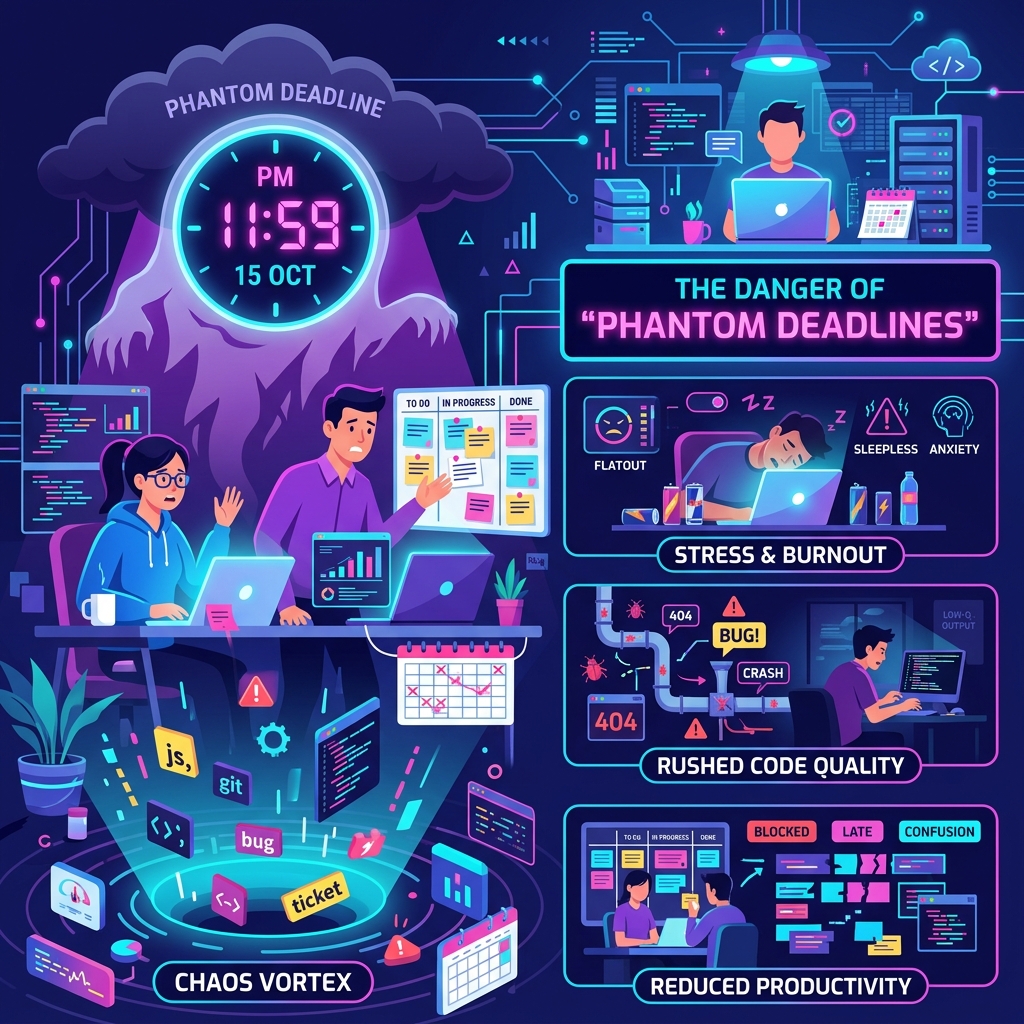
It usually happens in a meeting room, far away from any code editors. An executive looks at a calendar, picks a date that sounds good—perhaps right before a major industry conference or the end of Q3—and declares, "We need the new mobile app launched by September 15th."
No technical scoping has been done. No engineers have been consulted. No dependency maps have been drawn. The date is entirely disconnected from the physical reality of the work required to achieve it. This is a Phantom Deadline, and it is one of the most destructive forces in modern software development.
The Anatomy of a Phantom Deadline
A legitimate deadline is calculated from the bottom up. It is the sum of task estimates, plus calculated buffer time for risk, plus the cascading effects of logical dependencies. It is derived from math and experience.
A phantom deadline is dictated from the top down. It is based on marketing desires, arbitrary financial quarters, or executive impatience. When a phantom deadline is handed to an engineering team, it creates a severe structural misalignment between what the business demands and what physics allows.
The Toxic Fallout
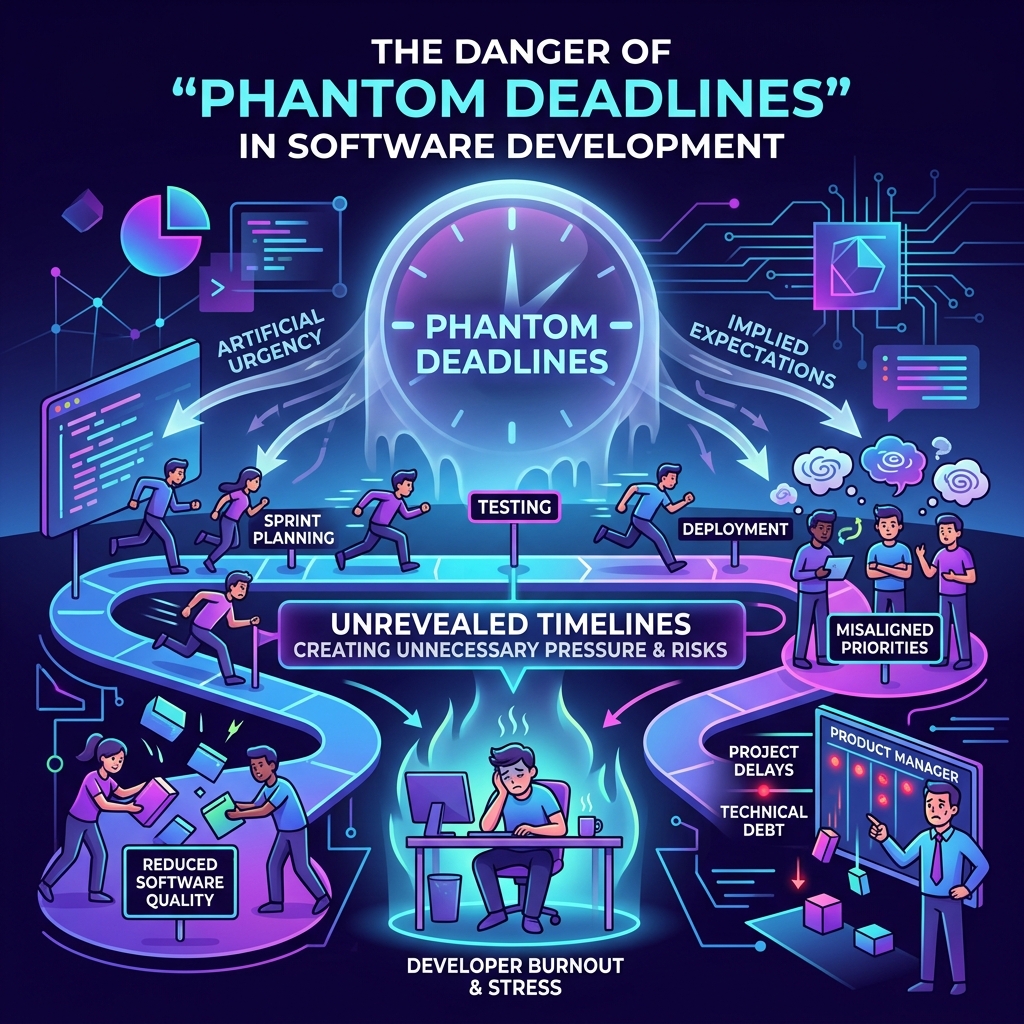
When leadership enforces a phantom deadline and refuses to alter the scope of the project, the engineering team has only a few terrible options, all of which damage the company in the long run.
1. The Accumulation of Technical Debt
You cannot change the laws of time, but you can borrow against the future. To hit an impossible date, engineers will skip writing automated tests. They will copy-paste code instead of building reusable components. They will hardcode configurations instead of building dynamic admin panels.
The product launches on September 15th, and management celebrates. But the codebase is now a fragile house of cards. The next time a feature needs to be added, it will take three times longer because the engineers have to navigate the toxic swamp of technical debt they were forced to create.
2. Burnout and Churn
The "Death March" is a well-known industry term for the final weeks leading up to a phantom deadline. Engineers work nights, weekends, and holidays fueled by pizza and caffeine. While heroic crunches can work once in an emergency, using phantom deadlines as a standard management tool destroys morale. Your best engineers—the ones who care about code quality and have options in the job market—will simply quit, leaving the company with a fragile codebase and no one who understands how it works.
3. The Death of Trust
When leadership repeatedly sets dates that are obviously disconnected from reality, the engineering team stops taking leadership seriously. Estimations become a game of extreme padding, where developers triple their estimates because they know management will arbitrarily cut the timeline in half anyway. The relationship devolves from collaborative problem-solving into an adversarial negotiation.
How to Defeat Phantom Deadlines with Visual Proof
As a project manager or engineering lead, your job is to protect your team from phantom deadlines. You cannot do this by simply saying, "That's impossible." You must prove it mathematically and visually.
This is where visual planning tools like Vedratic Project Manager become a shield for the engineering team. When an executive demands a September 15th launch, you don't argue with the date. Instead, you map the requirements.
You build out the Gantt chart: Backend setup (2 weeks) → API Design (1 week) → Frontend Integration (3 weeks) → Security Audit (2 weeks). You draw the dependency arrows. You show the critical path. The software calculates the end date based on the physics of the tasks, and the chart lands on October 30th.
Now, you take the visual map back to the executive and change the conversation. You aren't saying "no." You are saying: "Here is the physical reality of the scope you requested. It finishes on October 30th. If September 15th is a hard business requirement, we must adjust the variables. Which features are we cutting from the scope? Or, which additional resources are we hiring to parallelize these tasks?"
Conclusion
Dates on a calendar are not magical spells that make code write itself faster. True project management is the art of aligning business desires with engineering reality. By visualizing the work and the dependencies, we can banish phantom deadlines and build software in a way that is sustainable, high-quality, and grounded in truth.