Local-First Software in 2026: Why Browser Storage Wins
Over the past fifteen years, the software industry underwent an aggressive migration to the cloud. Desktop applications were steadily replaced by multi-tenant SaaS tools hosted on remote database clusters. While this shift unlocked effortless real-time collaboration across distributed devices, it also introduced a hidden tax that developers and product managers pay every single day: **latency, vendor lock-in, and fragile offline reliance**.
Every time you drag a task block in a modern web-based Gantt chart, your action typically triggers a waterfall of REST API requests or WebSocket payload syncs across the Atlantic. If your internet connection stutters during a high-speed planning session, the UI freezes while waiting for server confirmation. Even worse, if the SaaS provider experiences a cloud outage or alters their pricing structure, your entire engineering organization's proprietary planning history is held hostage.
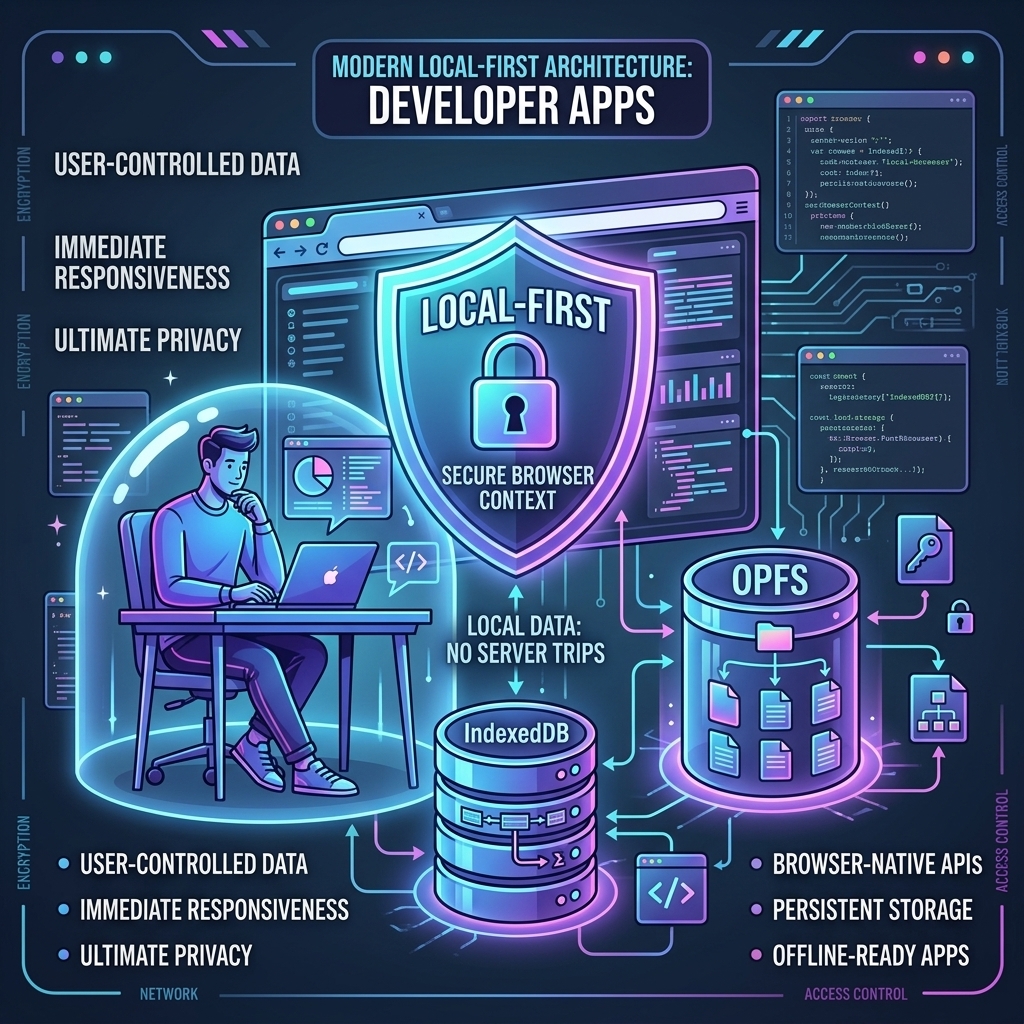
By 2026, the pendulum is swinging back toward **local-first architecture**. When designing **Vedratic Project Manager**, we made a foundational decision: **no cloud database required**. By combining modern browser storage APIs with client-side SVG generation, we built a visual planning editor that runs with instantaneous zero-latency responsiveness while keeping your data 100% private on your local disk.
What Exactly is Local-First Architecture?
Local-first software combines the best attributes of classic desktop applications—speed, data ownership, and robust offline execution—with the frictionless accessibility of modern web browsers. In a local-first application, the primary source of truth is always your device's local filesystem or browser database. The remote server is treated as an optional synchronization relay rather than a mandatory gatekeeper.
1. Sub-Millisecond UI Latency
Because all state changes (`such as resizing a Gantt bar or modifying dependency links`) mutate an in-memory data graph synced directly to local storage, interface interactions run at the speed of your local CPU memory buffer—never bounded by network round-trip time (`RTT`).
2. Absolute Data Sovereignty & GDPR Immunity
Sensitive project timelines often contain unreleased product roadmaps, employee workload allocations, and proprietary architectural milestones. With local-first design, this sensitive data never touches a third-party cloud server. Compliance audits and data breaches become non-issues by architectural definition.
The Modern Browser Storage Stack in 2026
Early web developers often dismissed local browser storage because legacy tools like `document.cookie` or basic `localStorage` were limited to tiny 5MB synchronous string blobs. Today, modern web standards provide a formidable multi-tier storage engine directly inside the sandbox:
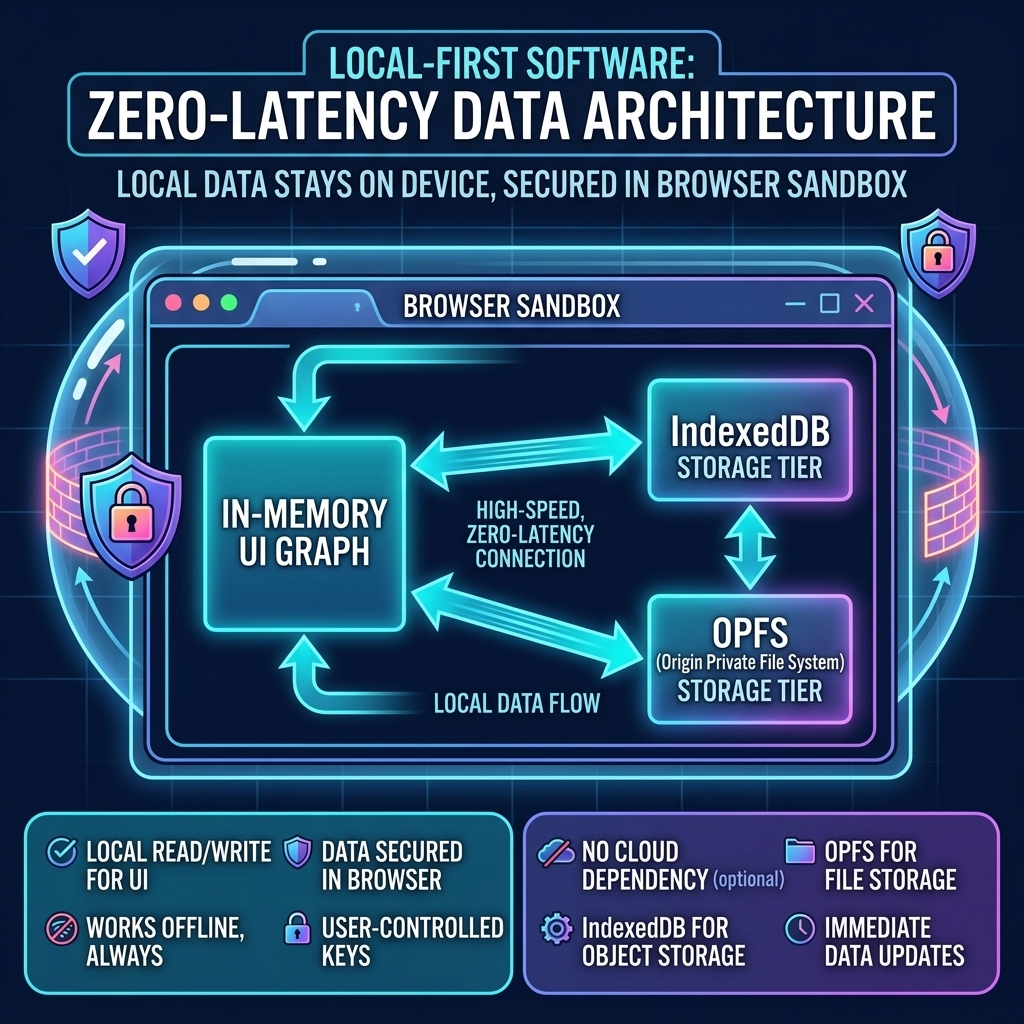
- IndexedDB & CRDT Engines: An asynchronous, transactional object store capable of handling gigabytes of structured JSON data. When paired with Conflict-Free Replicated Data Types (
CRDTslike Yjs or Automerge), IndexedDB allows local states to merge cleanly with peer devices across local networks without central server arbitration. - Origin Private File System (OPFS): A high-performance virtual filesystem API that provides direct, low-level byte read/write access (`sync access handles`) inside Web Workers. OPFS allows browser applications to run embedded SQL databases like SQLite (`via WebAssembly`) at speeds rivaling native desktop I/O.
- Universal Export & Portability: Local-first shouldn't mean trapped. Because our data models live locally, we provide instant one-click exports to standard portable formats—including raw JSON backups, CSV tables, and clean **Mermaid syntax diagrams** ready for immediate embedding inside GitHub pull requests or engineering documentation.
Why Privacy-First Engineering Matters for Developers
Software engineers are notoriously skeptical of heavy SaaS tools that demand mandatory sign-ups and track telemetry across every click. We want tools that behave like Unix utilities: fast, transparent, composable, and respectful of our system resources.
By eliminating cloud databases from our core dependency stack, we also eliminate server hosting costs. This allows us to offer our flagship developer tools without subscription paywalls or artificial storage caps. Your project capacity is limited only by your local hard drive.
Conclusion
The web browser has evolved from a simple document viewer into the most powerful application runtime on the planet. As modern APIs like OPFS and WebAssembly mature, the necessity of sending every single UI interaction to a remote cloud server is evaporating. By embracing local-first engineering, we build faster tools, respect user privacy, and ensure that your creative work remains permanently under your own ownership.