How to Manage Remote Teams with Asynchronous Planning
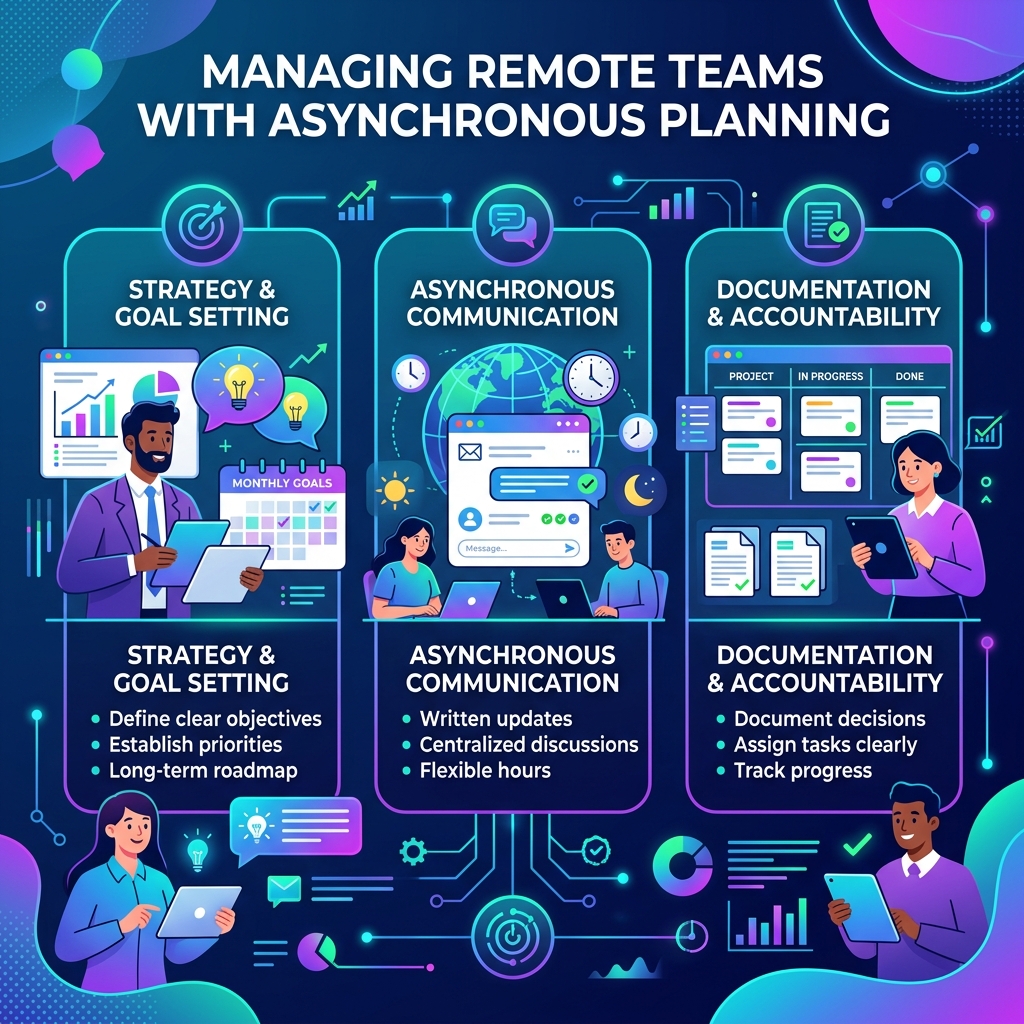
The transition to remote work has permanently altered the landscape of product development. Companies are no longer restricted by local talent pools; you can have a UI designer in Berlin, a backend engineer in Tokyo, and a project manager in New York. While this geographic diversity is a massive competitive advantage, it creates a logistical nightmare if you attempt to manage the team using traditional, office-era methodologies.
If your project management strategy relies on everyone being in the same Zoom room at 10:00 AM EST for a "quick sync," you are not managing a global team—you are punishing half your team by making them work at 11:00 PM or 5:00 AM. The key to unlocking remote productivity is moving from synchronous meetings to asynchronous planning.
The Sync vs. Async Divide
Synchronous communication requires all parties to be present simultaneously (e.g., meetings, phone calls, expecting an immediate Slack reply). It is great for emotional bonding, brainstorming, and resolving highly complex, nuanced conflicts.
Asynchronous communication (Async) allows parties to respond on their own schedule (e.g., properly documented tickets, recorded video updates, updated Gantt charts). It is vastly superior for deep work, deep focus, and managing time zones.
The Visual Roadmap as the Source of Truth
In an office, if a developer wants to know what the designer is working on, they can walk over to their desk and ask. In a distributed team, that "walk over" translates into a Slack ping, which interrupts the designer's flow, who may not respond for 8 hours because they are asleep.
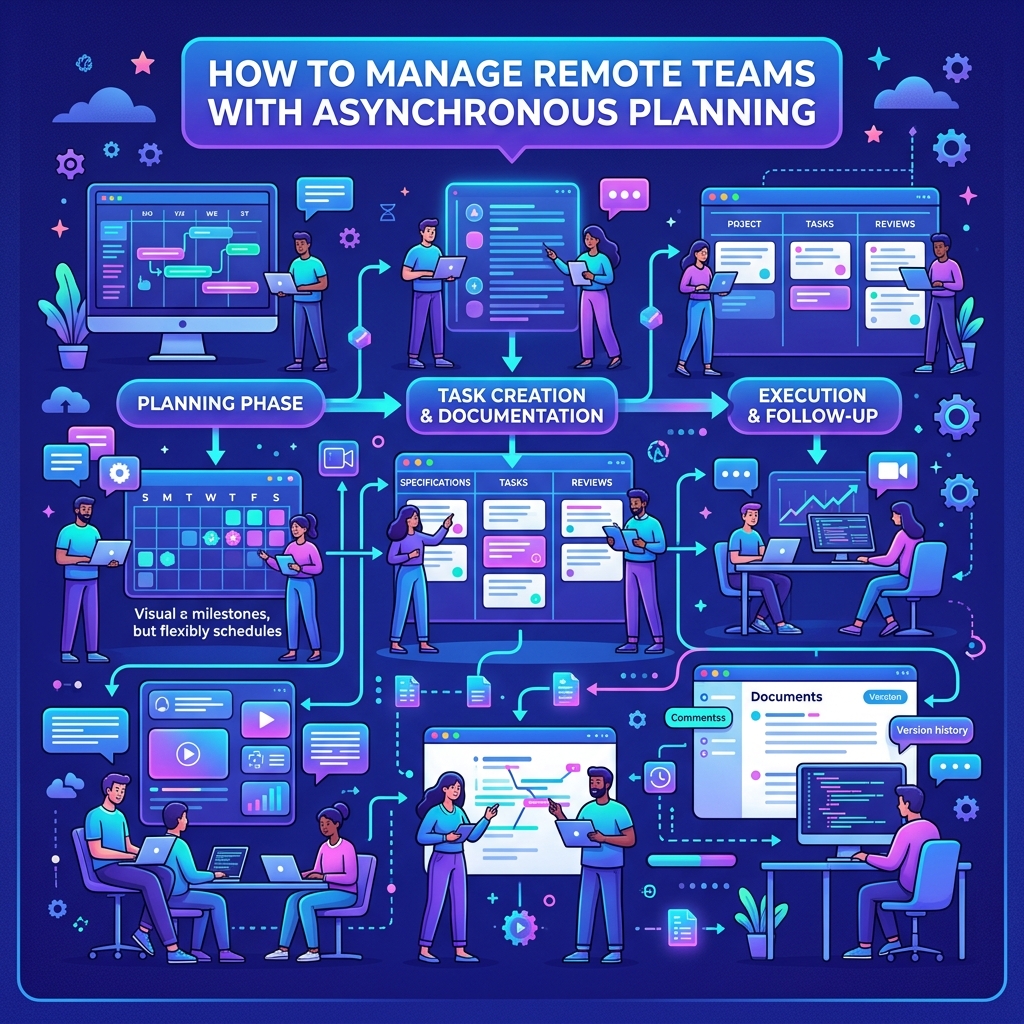
To operate asynchronously, the team must have a single source of truth that requires zero verbal explanation. This is why visual planning tools are indispensable for remote teams.
When the project is mapped out on a shared, visual timeline (like a Gantt chart):
- The developer in Tokyo can log on, look at the chart, and see exactly when the design assets will be finished by the designer in Berlin. They don't need to send a message.
- The CEO in New York can check the project status without dragging the whole team into a status update meeting.
- The dependencies are structurally enforced. The chart is the communication.
Writing "Async-First" Tickets
Asynchronous planning lives and dies by the quality of documentation. A Jira or Trello ticket titled "Fix the login bug" is useless in an async environment. If the developer picks up that ticket at 2 AM the manager's time, they will be blocked immediately because they don't have enough context, and the task will lose an entire 24-hour cycle waiting for clarification.
An async-first task must contain everything required to execute it without asking a single follow-up question. It should include:
- The Objective: What is the specific goal?
- The Context: Why are we doing this? (Links to previous PRs, Slack threads, or customer support tickets).
- The Dependencies: What is blocking this, and what does this block? (Ideally, these are already linked in your visual project planner).
- The Definition of Done: Exactly what conditions must be met for this to be marked complete?
The Async Handoff
The most dangerous moment in a remote project is the handoff between time zones. When the engineer in Europe finishes their shift, they must perform a structured "handoff" for the engineer in Asia.
Instead of a live meeting, this is best handled with a short, asynchronous recorded video (using tools like Loom) or a bulleted summary. "Here is the code I committed. I solved the database issue, but I am currently stuck on the auth token validation. The relevant files are X and Y." The receiving engineer wakes up, watches the 3-minute video, and immediately picks up the baton without losing a beat.
Conclusion
Managing remote teams requires trusting your people and trusting your systems. You must let go of the industrial-era instinct to "see" your employees working. By investing in visual, asynchronous planning tools, you eliminate the friction of time zones, protect your team's deep work focus, and allow projects to move forward 24 hours a day without requiring anyone to stay awake past midnight.