5 Brain Exercises That Rely on Mental Mapping
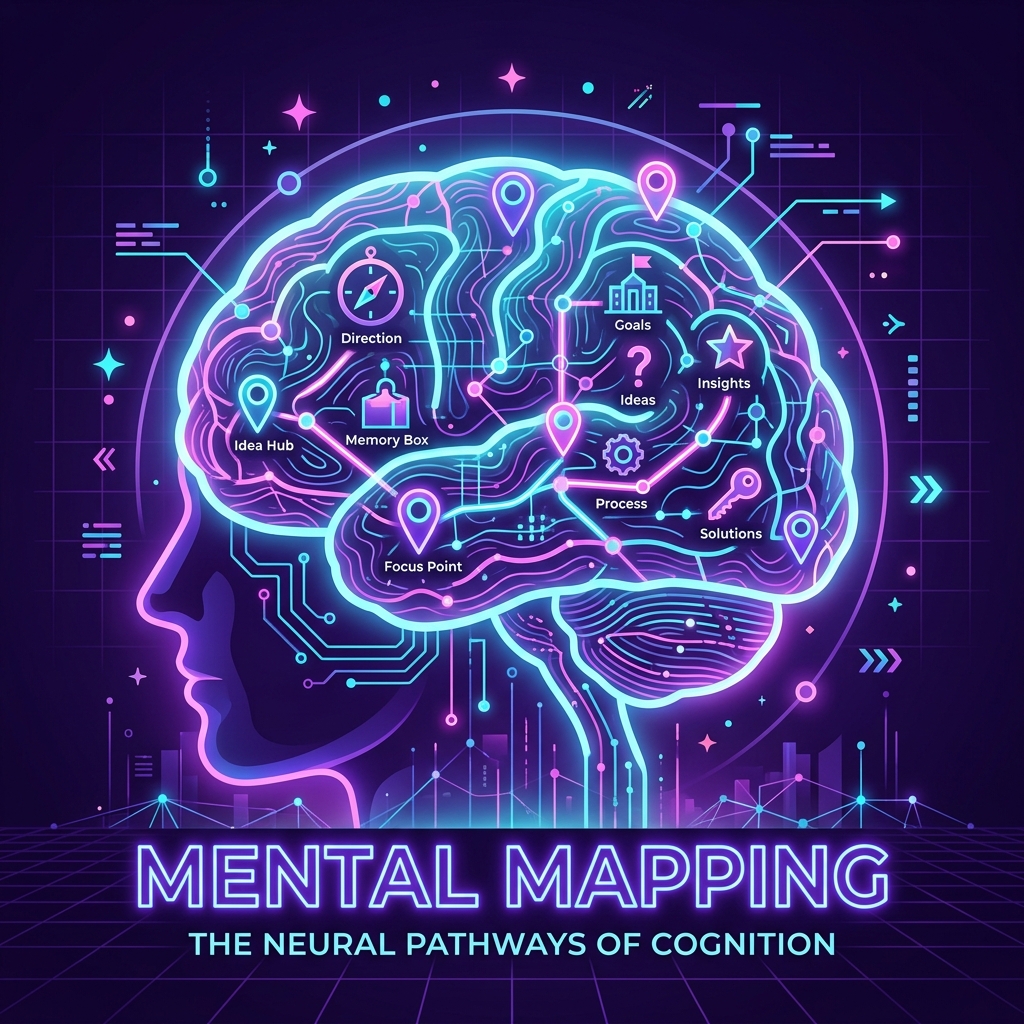
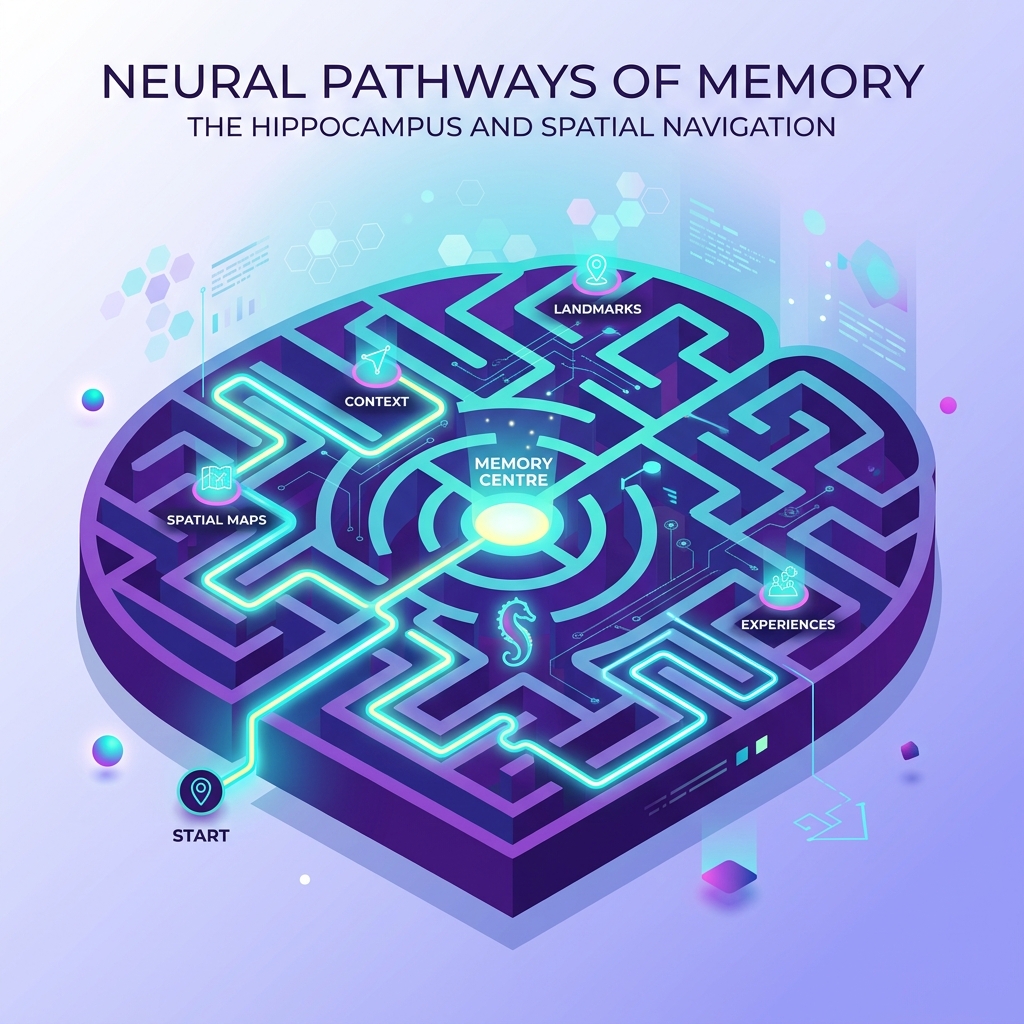
As we increasingly rely on smartphones to tell us where to go, what to do, and who to call, we are slowly outsourcing our brain's natural capabilities. One of the faculties suffering the most is our spatial memory—the complex neural machinery, primarily located in the hippocampus, that allows us to build internal maps of our environment.
Just like a muscle, the hippocampus needs regular resistance training to stay strong and grow. "Mental mapping" exercises are specifically designed to stimulate these neural pathways, improving your sense of direction, working memory, and overall cognitive resilience. Here are five practical brain exercises you can start doing today to keep your mental map sharp.
1. The "Blind" Commute
We all have familiar routes—the drive to work, the walk to the grocery store, the run through the park. Usually, we traverse these routes on autopilot, letting our subconscious handle the navigation while we think about other things.
The Exercise: Next time you take a familiar route, actively force yourself to map the environment as if you were drawing it from above. Note the exact sequence of turns. Identify three new landmarks you've never paid attention to before (a uniquely shaped tree, an oddly painted house, a specific street sign). When you return home, try to draw the route on a piece of paper entirely from memory, including the new landmarks. This forces the brain to transition from passive recognition to active spatial recall.
2. The Method of Loci (Memory Palace)
The Method of Loci is an ancient mnemonic device used by Greek and Roman orators to memorize hours-long speeches. It leverages the brain's incredible capacity for spatial memory to encode non-spatial information (like a grocery list or a set of names).
The Exercise: Choose a physical location you know intimately, like your childhood home. Imagine walking through the front door and moving through the rooms in a specific order. Now, take a list of 10 random items you want to remember. Mentally place one item in each specific location along your route (e.g., a giant carton of milk spilling on the welcome mat, a loaf of bread sleeping on the living room sofa). The more absurd the imagery, the better. Later, to recall the list, simply "walk" back through your mental house.
3. Reverse Engineering the Map
When we look at a map, we usually do it to find out how to get somewhere. This exercise flips the dynamic, asking you to translate abstract 2D shapes into physical reality.
The Exercise: Open a map application and find a neighborhood or city you have never visited. Spend 5 minutes studying the layout: the main arteries, the location of water bodies, the general grid structure. Then, close the map and mentally visualize yourself walking down one of the main streets. Which way is north? Is the river on your left or right? If you take the next left, what major road will you eventually hit? This trains the parietal lobe in complex coordinate translation.
4. Interactive Coordinate Gaming
Gamification is one of the most effective ways to ensure consistent cognitive training because it introduces the elements of play, reward, and flow.
The Exercise: Play geography targeting games like Globdrop. Instead of just trying to guess the location, be deliberate. When the prompt asks for "Vienna," don't just blindly click Central Europe. Force your brain to recall the borders: "It's in Austria, east of Switzerland, south of Germany, on the Danube river." By verbally or mentally charting the anchors before you click, you reinforce the geographic network in your brain. Over time, the time pressure of the game will make these retrievals lightning fast.
5. The Room Rotation Visualization
Mental rotation is a specific subset of spatial reasoning that is highly correlated with mathematical and engineering abilities. It involves holding a 3D object in your mind's eye and turning it to see it from different angles.
The Exercise: Sit in the center of a room you are currently in. Close your eyes. Now, mentally float up to the ceiling and try to visualize the layout of the furniture from a bird's-eye view. Once you have that image solid, try to mentally "rotate" the entire room 90 degrees clockwise. Where is the door now? Where is the window? This exercise is notoriously difficult but is an excellent high-intensity workout for your spatial working memory.
Conclusion
You don't need a gym membership to keep your brain fit. By intentionally engaging with your environment and challenging your spatial assumptions, you can ensure that your hippocampus remains healthy, dense, and ready to navigate whatever the real (or digital) world throws at it.